
Top Signs You Need Chimney Cleaning Service – Don’t Ignore These
Smoke rolling back into your living room is not the first sign your chimney has a problem. It’s usually the last one, showing up after a season or two of quieter warnings nobody noticed. The real early signals hide in the firebox, up the flue, and along the crown where most homeowners never look. We’re going to walk you through what to watch for so you can catch trouble while it’s still cheap to fix. And if reading about flues isn’t how you want to spend a Sunday, call (833) 847-7241. We answer 24/7.
Key Takeaways
- Creosote builds in stages, and the dangerous stages are often invisible without a flashlight and mirror.
- Exterior damage like spalling brick and a cracked crown means water is already getting in.
- A smoky fireplace can point to a liner sizing problem, a blockage, or negative pressure – each needs a different fix.
- Gas inserts and log sets still leave byproducts that call for an annual flue inspection.
- A five-minute walk-around outside can surface the most common early warnings before you book anything.
What Are the First Signs You Need Chimney Cleaning Service?
The earliest sign is creosote you can’t see from the hearth. Smoke that drafts sluggishly, a fire that’s harder to light than it used to be, and a black, glassy sheen inside the firebox all point to buildup that’s narrowing the flue. By the time smoke backs into the room, that buildup has had a full season or two to accumulate. In our experience around Aliso Viejo, homeowners usually call about the smoke and overlook the slowdown that came months before.
Watch for these early indicators:
- A dull, heavy draft – the fire smolders instead of catching cleanly.
- Soot flakes on the hearth after a burn, which means the flue is shedding deposits.
- A dark glaze on the firebox walls rather than light, powdery ash.
- A smoky smell in the room even when the fireplace is cold.
- Uneven burning – one side of the firebox stays cleaner than the other.
None of these means your house is about to catch fire. What they mean is the flue is telling you it’s due. A quick inspection confirms what’s actually there, and transparent pricing means you know the scope before anyone starts. If you’d rather not get on a ladder with a flashlight, call (833) 847-7241 and we’ll take a look.
The Three Stages of Creosote – and What You Can Actually See
Creosote is the byproduct of incomplete combustion, and it builds in three distinct stages. Most people only recognize the obvious one. The earlier stages are what a sweep can clean, while the latest stage is what causes chimney fires.
- Stage 1: Sooty, flaky, and light. It brushes off with standard tools. This is what you might see as a thin gray-brown film if you shine a light up the flue.
- Stage 2: A crusty, tar-like layer. It’s harder to remove and needs more than a brush. You can spot it with a flashlight and mirror held at the damper – it looks like dark, hardened drips along the flue walls.
- Stage 3: A glossy, hardened glaze, often the color of dark honey or black glass. It’s the most combustible stage and the one that fuels serious chimney fires. It requires professional removal, sometimes chemical treatment, and occasionally liner assessment.
The catch is that Stage 2 and Stage 3 creosote live above the damper, up where you can’t see them without a light and a mirror. That’s why “it looks fine from the couch” tells you almost nothing. When we inspect, we look up the flue with a camera so you see what we see. If the glaze runs deep enough, liner restoration with HeatShield can resurface a deteriorating flue interior without a full replacement – a repair many companies don’t offer. Before we sweep, we inspect, so the recommendation follows the evidence.
Exterior Warning Signs on the Brick and Crown
Walk outside and look up. The outside of your chimney records the same problems the inside does, often before the inside shows symptoms. Around Aliso Viejo, the heat and dry stretches mean moisture is the quiet enemy – water gets in, and the masonry pays for it.
- Spalling brick: faces flaking off or crumbling. That’s brick that has absorbed water and is breaking down from the inside.
- Efflorescence: a white, powdery residue. It’s harmless on its own, but it means water is moving through the brick and evaporating on the surface.
- Crown cracking: a cracked or chipped crown – the concrete cap at the very top – lets water pour straight down around the flue.
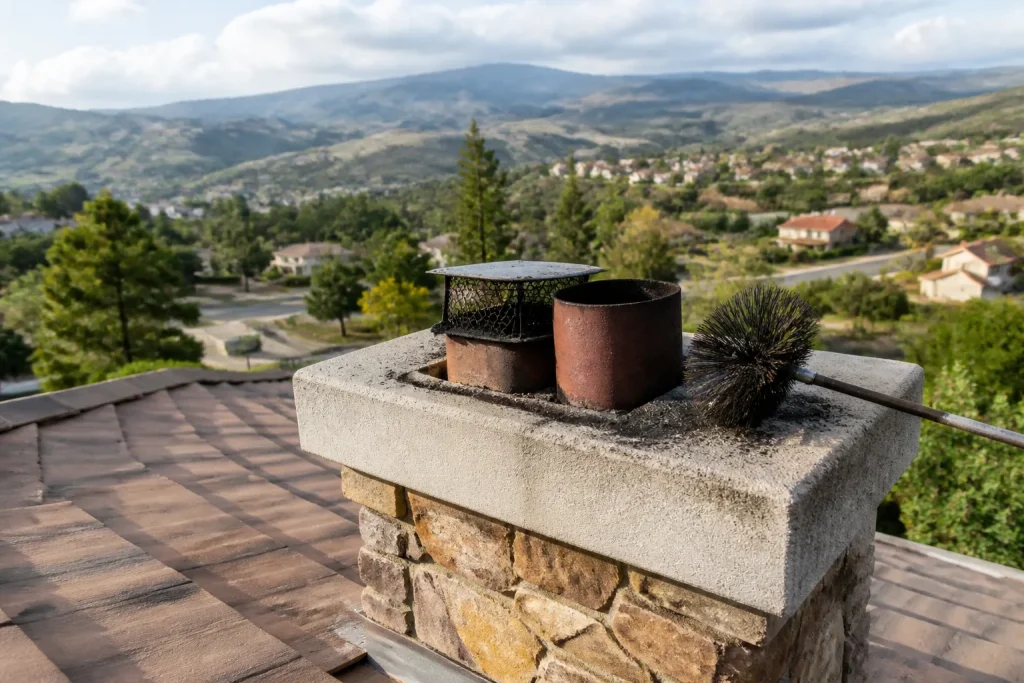
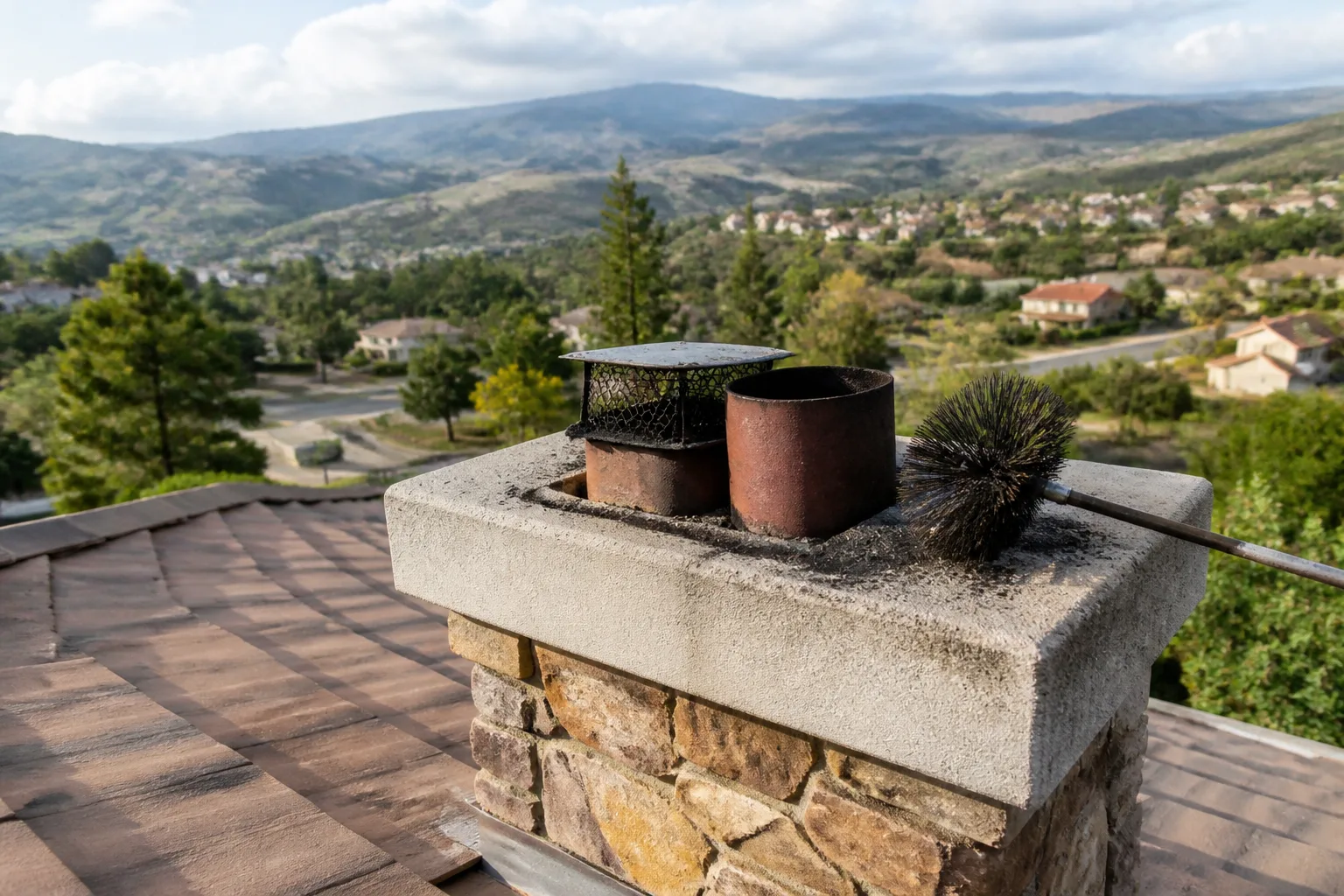
- Missing or damaged cap: a chimney cap that’s bent, rusted, or gone lets rain, birds, and debris straight into the flue.
- Rust streaks or staining on the chimney face, which can mark a failing flashing or a cap that’s no longer doing its job.
These are the structural signs that show up outdoors. Moisture in the crown or cap is often the root of interior damage, which is why we look at cap and crown specialization as preventive work – it protects whatever repair the homeowner has already paid for. If you’re seeing white powder, crumbling brick faces, or a cracked crown, that’s a call we’d want you to make. You can read more about what we handle on our chimney repair page.
Draft Problems as a Diagnostic Signal
A smoky fireplace isn’t one problem – it’s a symptom of at least three different ones, and they need different fixes. We see all three in Aliso Viejo homes, and telling them apart is the point of a diagnostic inspection rather than a quick once-over.
- A blockage: a nest, debris, or heavy creosote narrowing the flue. This is usually the easiest to solve – clean it and the draft returns.
- A liner sizing issue: the flue is too large or too small for the firebox opening. A flue that’s oversized for the fire can’t pull air fast enough, and an undersized flue chokes the fire. We use system-appropriate components from brands like Olympia Chimney so the liner matches the appliance.
- Negative pressure: the house is pulling harder than the chimney can. Newer, tighter construction, exhaust fans, and competing flues turn the fireplace into a room for smoke rather than a way to remove it.
That last one trips up a lot of people, because there’s nothing actually wrong with the chimney. But until you know which of the three you have, you’re guessing. A full-system inspection sorts it out before anyone touches a tool. For more on this, see our page on fireplace repair.
Gas Fireplaces and Log Sets Still Need an Annual Flue Inspection
Gas fireplaces look clean. That’s exactly why people skip the inspection. But gas inserts and vented log sets still produce combustion byproducts that move up the flue, and those byproducts still need somewhere to go. Moisture, flue gases, and the occasional debris accumulation don’t disappear because the flame is blue.
What you can’t see from the hearth:
- Condensation inside the flue from cooler, gas-produced moisture, which can corrode a liner over time.
- Vent obstruction from animal nests or fallen masonry you’d never notice from inside the room.
- Carbon monoxide risk if a vented appliance loses its draft. It’s odorless, so the flue is the only warning system you have.
For any gas appliance, the safe move is an annual flue inspection by someone trained to look at the whole system. The same applies if you have a wood insert; a flexible liner system like DuraFlex handles the bends and offsets that older flues often have. If you have a gas log set in Aliso Viejo, don’t assume it’s clean because it looks clean. Call (833) 847-7241 for a straightforward inspection.
A Five-Minute Exterior Walk-Around
You can’t check the inside of a flue safely from the ground, but you can walk the outside of the chimney and catch the most common early warnings before you book an inspection. Here’s what to look at – and what the signs actually mean.
- Start at the base: scan the brick from the roofline down for flaking faces and white residue. Spalls and efflorescence mean moisture is moving through the masonry.
- Look at the top edge: the crown should be a solid, unbroken cap. Any crack, gap, or separated corner is water heading into the flue.
- Check the cap: is it present, intact, and on straight? A missing or rust-eaten cap means debris and rain are getting in.
- Check the flashing: the metal where the chimney meets the roof. Lifted edges and rust streaks point to leaks.
- Look at the chimney from two angles: a lean or a bulge in the brickwork is a structural sign worth having inspected.
Do this on a cool morning, not on a hot afternoon when glare hides cracks. If any of these look off, it doesn’t mean disaster – it means you’ve got information you can act on. And if you want a professional eye on it, our chimney sweep visits start with a full-system inspection, so nothing at the top or the bottom of the system gets missed.
When to Call a Pro
Bring in a professional if any of the following is true: you’ve had smoke come back into the room, you can’t get a clear look up the flue, you see cracked brick or a damaged crown, or it’s been a season or two since your last inspection. This is the point where guessing gets expensive. We’re happy to answer a question over the phone, but a proper diagnosis needs eyes on the flue – and we’d rather you skip the guesswork. If you’re in Aliso Viejo and want the full picture, we’re the Aliso Viejo Chimney Sweep Pros local pros to call.
The Bottom Line
The signs that matter most are the quiet ones: a stubborn draft, creosote you can’t see, and brick or crown damage on the outside. Catch them early and most of what we fix is routine. Ignore them for a couple of seasons and the same problems get deeper and more costly. Our technicians have up to 9 years of experience across sweep, inspection, chimney repair, and cap and crown work, so one crew handles the full system start to finish. If you’re in Aliso Viejo and need help, Aliso Viejo Chimney Sweep Pros offers free estimates – call (833) 847-7241. We answer 24/7. Fast dispatch, 7am-7pm, Sunday through Friday.
Frequently Asked Questions
A sluggish draft, soot flakes on the hearth, a dark glaze in the firebox, and a smoky smell in the room are the most common early signs. Visible smoke backdrafting into the room is a later sign, not an early one. If you notice any of these in your Aliso Viejo home, call (833) 847-7241 for an inspection – estimates are free.
Yes. Gas fireplaces and vented log sets still produce combustion byproducts and moisture that move through the flue, and an obstruction or lost draft can create a carbon monoxide risk. An annual flue inspection confirms the vent is clear and working. Call (833) 847-7241 to book yours.
Stage 3 creosote, the hardened glaze, is highly combustible and is the layer that fuels serious chimney fires. You often can’t see it without a flashlight and mirror, which is why a professional inspection matters. If it’s been a while since your last look, call (833) 847-7241 and we’ll check it for you.
Crown and cap problems allow water into the flue, so they’re worth fixing promptly, but roof-top height and masonry work make this a job best left to a pro. A cracked crown or damaged cap is one of the easiest early warnings to catch – call (833) 847-7241 and we’ll take a look before the moisture damage spreads.
Written by the team at Aliso Viejo Chimney Sweep Pros.
Need Chimney Cleaning Help?
Call Aliso Viejo Chimney Sweep Pros - the local pro we connect you with is licensed and insured, here with fast help in Aliso Viejo.
(833) 847-7241