
Chimney Sweep: Repair or Replace? How Aliso Viejo Homeowners Decide
Most homeowners asking about chimney repair or replacement are really asking a bigger question: how do I know if the person standing on my roof is telling me the truth? A recommendation to replace everything when you have a cracked crown and a dirty liner is probably overselling. A recommendation to just sweep when part of the flue has collapsed is underselling. Neither answer is useful without a component-level breakdown, so here’s how to evaluate each part of your chimney system on its own terms before you decide anything.
Why Repair-or-Replace Is Never One Decision
Your chimney isn’t one object. It’s a stack of systems that wear at different rates: the flue liner inside, the firebox where the fire sits, the crown on top, the flashing where the chimney meets the roof, and the chase cover that closes off a manufactured chimney. Each one has its own repair threshold, its own replacement timeline, and its own failure mode.
A chimney in Aliso Viejo can easily need a crown replacement and a sweep while the liner itself is sound for years to come. It can also have a perfectly intact crown and a liner that’s spalling from the inside. Treating the whole chimney as one yes-or-no decision is where homeowners get talked into work they don’t need, or talked out of work they do.
Here’s the framework we walk through on every evaluation:
- Liner: Can it be restored in place, relined with a flexible stainless insert, or does it need full replacement?
- Firebox: Are the firebrick and mortar joints intact, or is heat getting behind them?
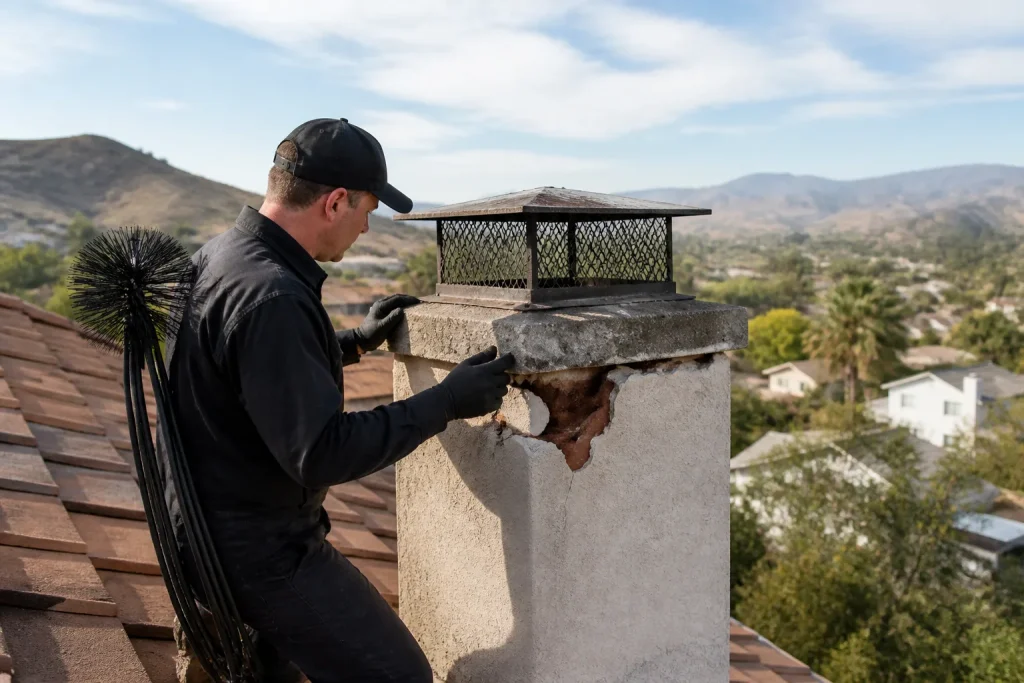
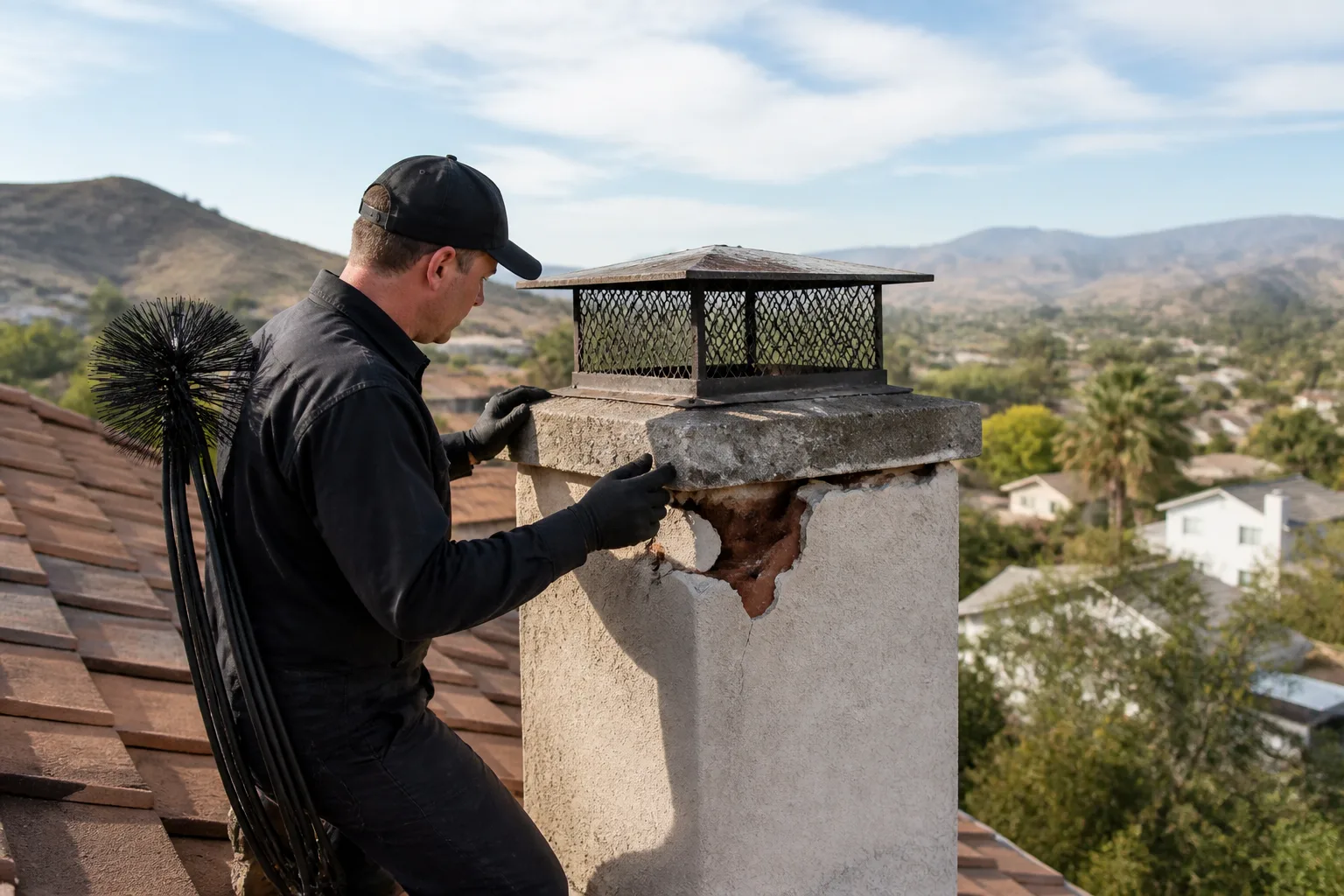
- Crown: Is it shedding water away from the flue, or channeling it in?
- Flashing: Is the roof-to-chimney seal tight, or is it letting moisture track down the chase?
- Chase cover: Is it solid and correctly fitted, or rusted and loose?
Each of these gets its own verdict. The decision to replace should belong to the component that failed, not the whole system by default.
Liner: When Restoration Beats Full Replacement
The liner is where most repair-or-replace conversations actually happen, and it’s also where the widest range of options exists. A deteriorating flue interior doesn’t automatically mean a new liner. Sometimes it means resurfacing.
HeatShield is a ceramic flue resurfacing system, and it addresses exactly this scenario: a liner that’s cracked, spalling, or has gaps at the joints but is still structurally present. Rather than removing and rebuilding the flue, the resurfacing product is applied to the interior to seal and restore it. Many chimney companies can’t offer this because they only do full relines, so the recommendation defaults to replacement whether it’s needed or not.
Full relining becomes the right call when the existing flue is too damaged for resurfacing, when there’s no liner at all, or when the flue geometry needs correcting. That’s where a flexible stainless system like DuraFlex earns its place: it can be routed through chimneys with offsets and bends that rigid liners can’t navigate. If your Aliso Viejo home has a fireplace insert or an appliance connection with an awkward flue path, that flexibility is the difference between “we can reline this” and “we’ll have to rebuild.”
What separates restoration from replacement in practice:
- Resurfacing (HeatShield): Cracks, spalling, and joint gaps in an otherwise sound flue.
- Flexible relining (DuraFlex): No liner present, heavy deterioration, offset flue paths, or a change in appliance.
- Full replacement: Collapsed sections or damage that can’t be sealed from the inside.
Reading Your Level 2 Inspection Report
A Level 2 inspection is the one that gives you the information to make this decision well. It includes a video scan of the flue interior, which means the findings should be visible to you, not just described. Ask to see the footage. A credible technician will show you the crack they’re talking about on the screen, and you’ll be able to tell the difference between a hairline and a gap.
The report should sort findings into three buckets, and you should ask explicitly which bucket each item falls into:
- Must fix now: Conditions that make the chimney unsafe to use, like a blocked flue, a cracked liner with gaps, or failing firebox mortar.
- Fix before next burning season: Deterioration that will get worse and cost more if it’s ignored, like a crown that’s starting to crack.
- Monitor: Minor wear that’s worth watching but doesn’t justify work yet.
If a report doesn’t make that distinction for you, ask for it. “Which of these can wait until next year?” is a fair question, and the answer tells you a lot about who you’re dealing with. A company that’s honest about what can wait is usually more trustworthy about what can’t. Before any of that, a proper inspection should come first: before we sweep, we inspect, so the cleaning follows the diagnosis rather than replacing it.
What Southern California Fireplace Use Does to the Timeline
Aliso Viejo homeowners typically burn somewhere between one and ten fires a year. That’s a light-use pattern, and it changes the deterioration math in ways that national chimney advice often misses.
Creosote accumulation, the main driver of chimney fires, builds up with use, so a low-use fireplace in Aliso Viejo may go longer between sweeps than a fireplace in a cold climate. The flip side is that the deterioration you do get tends to be moisture-driven rather than heat-driven. Mild winters mean the chimney isn’t expanding and contracting through hard freezes, but the crown and flashing are still exposed to sun and the occasional rain, and water getting into a chimney is what quietly rots the flue from the inside out.
So the Aliso Viejo pattern looks like this: less creosote, more moisture damage, and a longer window before a liner genuinely needs replacing. That’s good news for replacement timelines, and a reason to take crown and flashing repair seriously even when the firebox looks fine. The moisture path is often the real story.
Red Flags in a Repair-or-Replace Recommendation
You should be able to tell a real diagnosis from a sales pitch. These are the patterns worth walking away from:
- Vague scope. “Your chimney needs work” isn’t a recommendation. You want the specific component, the specific condition, and the specific fix.
- No itemized breakdown. A quote should separate the liner, the crown, the flashing and the sweep, so you can see exactly what you’re paying for and choose what to do now.
- Pressure to decide same day. A genuine safety hazard is worth acting on, but “sign today or the price changes” is a sales tactic, not a safety finding.
- No camera evidence. If you can’t see the problem on the inspection footage, you can’t verify the recommendation.
The reverse red flag is just as important: a recommendation to clean when there’s a real structural problem. That’s why we don’t lead with the sweep. If you’re comparing options in Aliso Viejo, ask any company to walk you through the component-level findings before you sign anything, and see whether they can explain why each item is repair, replace, or wait.
Related services in Aliso Viejo
If the inspection turns up a firebox problem, our fireplace repair service covers that end of the system. Structural issues with the flue or masonry are handled through chimney repair. And if all you need is a routine cleaning, our chimney sweep is the starting point, with a full inspection built in. You can read more about the full scope of what we handle at Aliso Viejo Chimney Sweep Pros.
When to call a pro
Some of this is worth checking yourself: a loose cap you can see from the ground, a crown that’s visibly cracked from a ladder, water staining on the ceiling near the chase. The moment it involves the flue interior, the firebox, or anything above a gentle ladder inspection, it’s time for a professional. A camera scan and a trained eye are what turn a guess into a decision, and the safety stakes are real.
The Bottom Line
Repair or replace is a component decision, not a whole-chimney verdict. Most Aliso Viejo chimneys need a mix: a repair here, a restore there, and a replace only for the part that actually failed. Liner resurfacing with HeatShield covers more cases than full relining, flexible systems like DuraFlex open up chimneys that used to be impossible to reline, and crown and flashing work protect everything underneath. Ask for the itemized breakdown. Ask to see the footage. Ask what can wait. The answers tell you who you’re dealing with.
If you’re in Aliso Viejo and need help, Aliso Viejo Chimney Sweep Pros offers free estimates. Call (833) 847-7241. We answer 24/7. Fast dispatch from 7am to 7pm, Sunday through Friday. Our technicians have up to 9 years of experience, and every job starts with an inspection before anything is swept or recommended.
Frequently Asked Questions
It depends on the condition of the existing flue, and often it can be repaired rather than replaced. Cracks, spalling and joint gaps in an otherwise sound flue can be restored in place with HeatShield ceramic resurfacing. Full relining is the right call when there’s no liner, when the flue is too damaged to resurface, or when the flue path needs a flexible stainless insert like DuraFlex. Ask to see the camera scan so you can verify which case you’re in. Call (833) 847-7241 for an exact quote – estimates are free.
A legitimate recommendation names the specific component, the specific condition, and the specific fix, and it comes with footage you can see. The tell is whether the report sorts findings into “must fix now,” “fix before next season,” and “monitor.” A company that can’t show you the problem on the inspection camera, won’t itemize the quote, or pressures you to decide the same day is giving you a sales pitch, not a diagnosis. Call (833) 847-7241 if you want a second look – estimates are free.
For most Aliso Viejo households burning one to ten fires a year, an annual inspection is the right cadence, and actual sweeping may be needed less often than in a cold climate because creosote builds with use. What matters here is moisture rather than heavy heat cycling, so the inspection should pay attention to the crown, flashing and chase cover along with the flue. Call (833) 847-7241 to book an inspection – estimates are free.
Skipped maintenance usually shows up as two problems: creosote loading in the flue, which increases chimney fire risk, and moisture getting past a failing crown or flashing, which quietly damages the liner and masonry from the inside. Neither gets cheaper with time, and both are easier to catch on an inspection than after they’ve spread. If you’re unsure whether your chimney needs work this year, the scan will tell you. Call (833) 847-7241 for an exact quote – estimates are free.
Written by the team at Aliso Viejo Chimney Sweep Pros.
Need Chimney Cleaning Help?
Call Aliso Viejo Chimney Sweep Pros - the local pro we connect you with is licensed and insured, here with fast help in Aliso Viejo.
(833) 847-7241